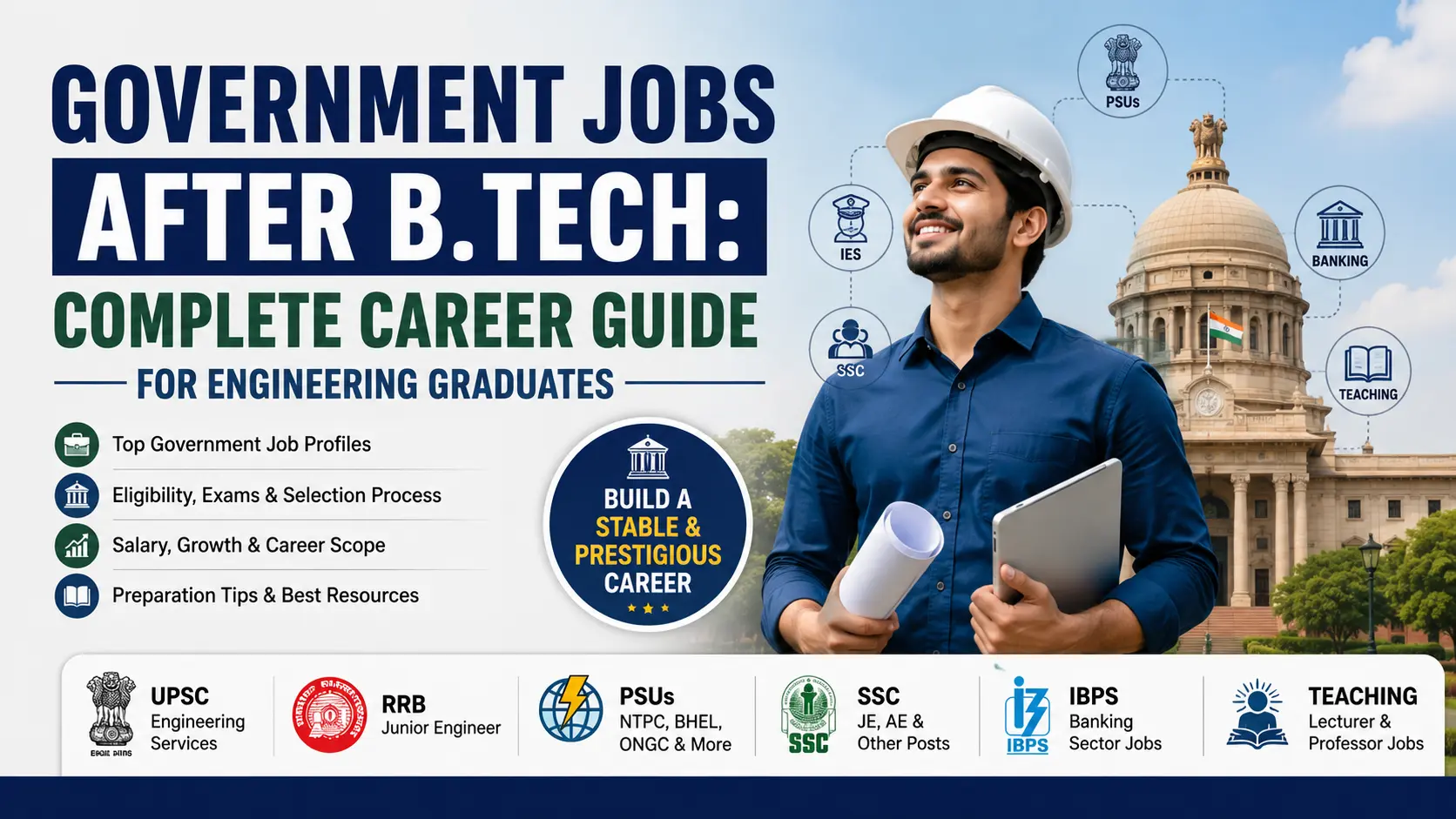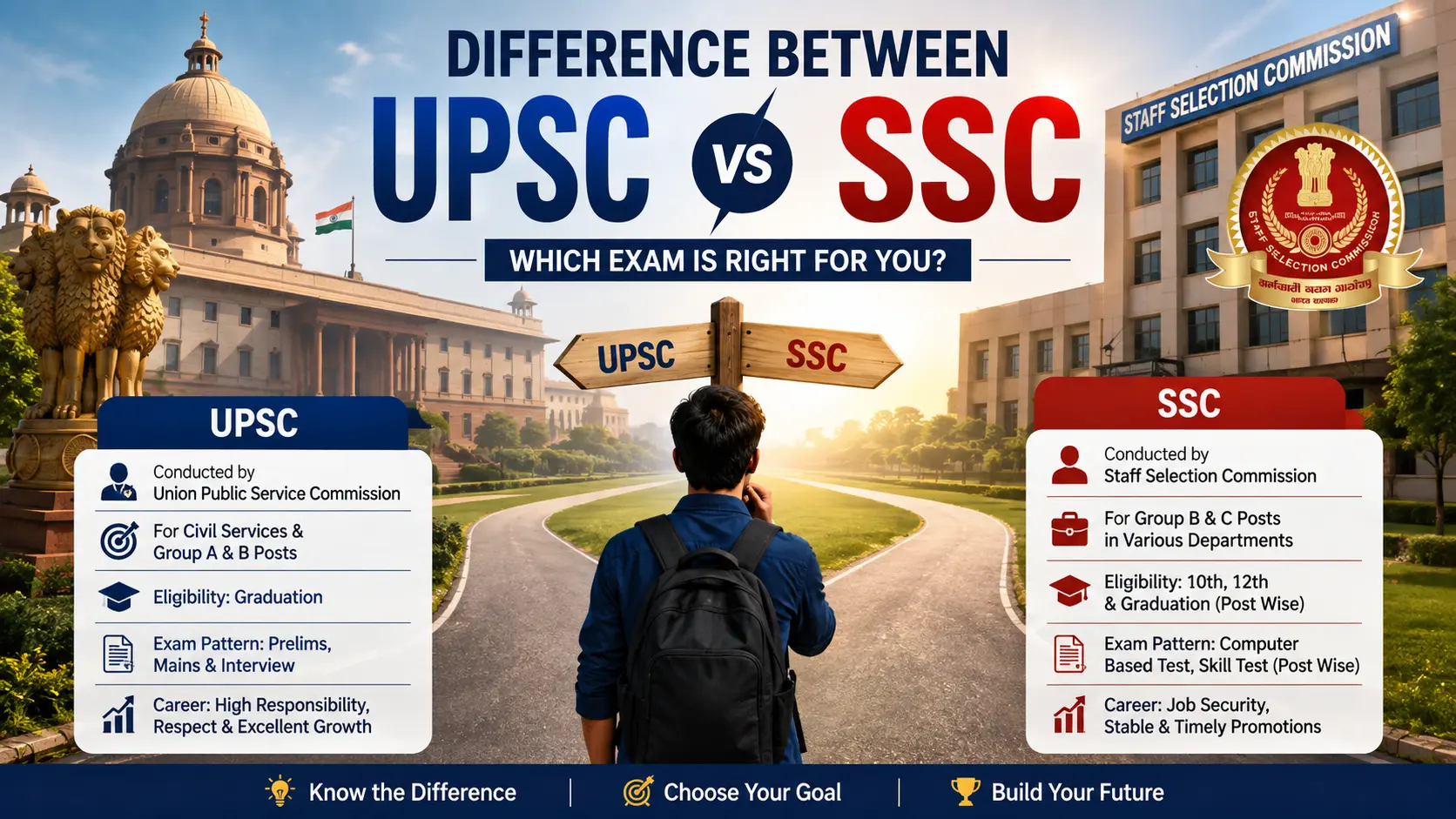


Bank Jobs in India – Complete Guide for Bank Job Aspirants
Bank Jobs in India continue to be among the most attractive career options for graduates, professionals and young Indians looking for stable employment, career growth, professional status and opportunities in the financial sector. From Probationary Officers and Customer Service Associates to Specialist Officers, IT professionals, economists, law officers, risk managers and credit analysts, the banking sector offers a wide range of careers.
For fresh graduates, the most popular routes include IBPS PO, IBPS Customer Service Associate, IBPS Specialist Officer, IBPS RRB and SBI PO/SBI Junior Associate. Candidates interested in regulatory and financial institutions can also target RBI Grade B, RBI Assistant, SEBI, NABARD and National Housing Bank recruitment.
This complete guide explains the major bank recruitment organisations, examinations, eligibility, job profiles, preparation strategy, career opportunities and official websites that bank-job aspirants should monitor.
Why Are Bank Jobs Popular in India?
Banking careers combine professional work, structured promotion systems, training, employee benefits and the opportunity to work in one of India’s most important economic sectors.
Public sector banks recruit thousands of candidates through competitive examinations and direct recruitment. Private banks also hire graduates, MBAs, finance professionals, technology specialists and experienced candidates through their own recruitment processes.
Banking is no longer limited to traditional counter work. Modern banks require professionals in digital banking, cybersecurity, artificial intelligence, data analytics, risk management, treasury, investment banking, compliance, agriculture finance and information technology.
Major Categories of Bank Jobs in India
| Job Category | Typical Posts | Suitable Candidates |
| Clerical / Customer Service | Customer Service Associate, Junior Associate | Graduates |
| Officer Entry | Probationary Officer, Management Trainee | Graduates |
| Specialist Officer | IT Officer, Law Officer, HR Officer, Agriculture Officer | Graduates with relevant professional qualifications |
| Regulatory Banking | RBI Grade B, RBI Assistant | Graduates / specialists depending on post |
| Financial Institutions | Assistant Manager, Grade A/B Officers, Analysts | Graduates and professionals |
| Technology | Software Engineer, Cyber Security Officer, Data Analyst | B.Tech, MCA, IT and technology professionals |
Top Organisations Hiring for Bank and Financial Sector Jobs
A bank-job aspirant should not restrict preparation to one examination. Several organisations recruit candidates for banking, financial regulation, insurance and development-finance careers.
| Organisation | Important Recruitment Routes | Typical Opportunities | Official Career Source |
| IBPS | PO/MT, Customer Service Associate, SO, RRB | Officer, clerical and specialist positions | IBPS official website |
| State Bank of India | SBI PO, SBI Junior Associate, specialist recruitment | Officer, clerical and specialist jobs | SBI Careers |
| Reserve Bank of India | RBI Grade B, RBI Assistant and specialist recruitment | Central banking and regulatory careers | RBI Opportunities |
| Punjab National Bank | IBPS recruitment and specialist/direct recruitment | PO/MT, CSA, SO and professional roles | PNB Recruitment |
| National Housing Bank | Officer and specialist recruitment | Banking, finance, risk, technology and management | NHB Opportunities |
| SEBI | Grade A and specialist recruitment | Regulatory and capital-market careers | SEBI Careers |
| NABARD | Grade A and specialist recruitment | Development banking and rural finance | NABARD Careers |
| LIC | AAO and specialist recruitment | Insurance, finance and administrative careers | LIC Careers |
1. IBPS – One of the Biggest Routes to Public Sector Bank Jobs
The Institute of Banking Personnel Selection (IBPS) is one of the most important recruitment channels for public sector banking jobs. Instead of applying separately to every participating bank for certain common recruitment processes, candidates can compete through IBPS examinations.
Important IBPS recruitment streams include:
- IBPS Probationary Officer / Management Trainee
- IBPS Customer Service Associate
- IBPS Specialist Officer
- IBPS Regional Rural Banks
The participating banking ecosystem can include major public sector banks and Regional Rural Banks depending on the recruitment cycle and notification.
Official source: Candidates should always verify the current notification, participating organisations, eligibility and vacancies on the official IBPS website before applying.
Major IBPS Examinations
| Exam | Target Position | Broad Eligibility | Selection Components |
| IBPS PO/MT | Probationary Officer / Management Trainee | Graduate | Prelims, Mains and interview/personality-related stages as notified |
| IBPS Customer Service Associate | Clerical/customer-service cadre | Graduate | Online examination stages as notified |
| IBPS SO | Specialist Officer | Relevant specialist qualification | Prelims/Mains/interview depending on post |
| IBPS RRB Officer | Officer Scale I/II/III | Graduate / specialist qualification | Online examinations and interview where applicable |
| IBPS RRB Office Assistant | Office Assistant | Graduate | Online examination stages as notified |
2. State Bank of India – SBI PO, Junior Associate and Specialist Careers
State Bank of India (SBI) offers one of India’s most recognised banking career paths. SBI’s official careers information identifies Probationary Officers as a junior-management entry route and Junior Associates as a clerical/customer-service route. SBI also recruits professionals through specialist and lateral hiring.
Major opportunities include:
- SBI Probationary Officer
- SBI Junior Associate
- Specialist Officer positions
- Technology and digital banking roles
- Risk, credit, treasury and analytics positions
- Lateral professional recruitment
SBI specifically highlights specialist opportunities for professionals such as Chartered Accountants, analysts, statisticians, economists, lawyers, engineers, system engineers and Rajbhasha officers.
3. RBI – A Premium Career in Central Banking
The Reserve Bank of India (RBI) is India’s central bank and offers careers that are different from conventional commercial banking jobs.
Important recruitment opportunities include:
- RBI Grade B – General
- RBI Grade B – DEPR
- RBI Grade B – DSIM
- RBI Assistant
- Legal and specialist positions
- Engineering and technical positions
RBI’s official recruitment portal states that vacancies, call letters, interview schedules and results are published through its official recruitment website. The Bank also warns candidates about fraudulent appointment letters and fake websites.
RBI Assistant is another important opportunity for graduates. For example, RBI’s recruitment for the 2025 panel year involved a country-wide competitive examination in two phases followed by a Language Proficiency Test.
RBI Grade B is particularly attractive for candidates interested in economics, monetary policy, banking regulation, financial markets and public policy. The 2026 Grade B recruitment covered General, DEPR and DSIM cadres.
4. NABARD – Banking Careers Connected with Rural India
The National Bank for Agriculture and Rural Development (NABARD) offers opportunities for candidates interested in rural development, agriculture finance, development banking, economics and related areas.
Typical career areas may include:
- Assistant Manager / Grade A
- Development banking
- Agriculture
- Economics
- Finance
- Information Technology
- Legal and other specialist disciplines
NABARD can be especially attractive for graduates and professionals who want a career combining finance with rural development and agricultural-sector institutions.
5. SEBI – Banking Aspirants Can Also Target Financial Regulators
The Securities and Exchange Board of India (SEBI) is India’s securities-market regulator. Although SEBI is not a conventional commercial bank, its recruitment is highly relevant to candidates preparing for premium financial-sector careers.
SEBI careers can include positions related to:
- General administration
- Legal
- Information technology
- Research
- Engineering
- Official language
- Finance and other specialist areas
SEBI itself states that it looks for candidates with analytical ability, communication skills, drafting ability, technical knowledge and a willingness to learn.
6. National Housing Bank – Specialist Financial Careers
The National Housing Bank (NHB) is another organisation worth monitoring. NHB describes itself as an officer-oriented institution and publishes recruitment opportunities for officers and professionals. Its recruitment archive includes regular, contractual and deputation-based positions.
Recent recruitment examples have included senior positions in areas such as credit monitoring, treasury, human resources, economics, technology and risk.
This makes NHB particularly relevant to experienced professionals as well as candidates targeting specialist financial-sector careers.
7. Punjab National Bank and Other Public Sector Banks
Major public sector banks also recruit through IBPS as well as through bank-specific specialist/direct recruitment drives.
Punjab National Bank (PNB), for example, publishes recruitment and career notices on its official website. Its recruitment records demonstrate appointments through IBPS as well as specialist recruitment, including IT, data science, cybersecurity, credit, industry and other streams.
Other banks that bank-job aspirants should monitor include:
- Bank of Baroda
- Canara Bank
- Union Bank of India
- Indian Bank
- Bank of India
- Central Bank of India
- UCO Bank
- Punjab & Sind Bank
- Indian Overseas Bank
- Bank of Maharashtra
Bank Job Eligibility – Who Can Apply?
Eligibility varies according to the recruitment notification. However, graduation is the common qualification for many major entry-level banking examinations.
| Educational Background | Possible Banking Opportunities |
| 12th Pass | Some support, subordinate or specific contractual opportunities depending on notification |
| Any Graduate | PO, Clerk/CSA, RRB, Assistant and many general banking positions |
| B.Com / Commerce | PO, banking, finance, accounting, credit and specialist roles |
| BBA / MBA | PO, management, marketing, HR, finance and specialist roles |
| B.Tech / BE | PO plus IT, cybersecurity, engineering, data and specialist positions |
| LLB / LLM | Law Officer and legal specialist recruitment |
| CA / CFA / Finance Professionals | Credit, finance, risk, treasury and specialist recruitment |
| Agriculture Degree | Agriculture Officer and rural/development banking opportunities |
Banking Exams: Which One Should You Target?
Aspirants should choose examinations according to their qualification, age eligibility, career preference and preparation level.
| Your Goal | Examinations / Recruitment to Consider |
| General Banking Officer | IBPS PO, SBI PO |
| Clerical / Customer Service | IBPS CSA, SBI Junior Associate |
| Rural Banking | IBPS RRB, NABARD |
| Central Banking | RBI Grade B, RBI Assistant |
| Capital Market Regulation | SEBI Grade A and specialist recruitment |
| Housing Finance / Development Banking | NHB and related specialist recruitment |
| IT / Cybersecurity | IBPS SO IT, bank-specific IT recruitment, SBI specialist recruitment |
| Law | IBPS SO Law, bank-specific Law Officer recruitment |
| Agriculture | IBPS Agriculture Field Officer, NABARD and rural banking opportunities |
What Is the Typical Bank Exam Syllabus?
Most major banking examinations test a combination of aptitude, reasoning, English and general/current awareness. Specialist and regulatory examinations may include substantially different professional subjects.
| Subject | Important Areas |
| Quantitative Aptitude | Percentage, ratio, averages, profit & loss, time-work, data interpretation, arithmetic |
| Reasoning | Puzzles, seating arrangements, syllogism, coding-decoding, inequalities, logical reasoning |
| English | Reading comprehension, grammar, vocabulary, cloze tests, error detection |
| General Awareness | Banking awareness, economy, current affairs, government schemes and financial news |
| Computer Awareness | Basic computer concepts, internet, networking and cybersecurity fundamentals where applicable |
| Professional Knowledge | IT, Law, Agriculture, HR, Finance or other specialist subject depending on post |
How Should a Bank Job Aspirant Prepare?
Step 1: Choose Your Primary Examination
Do not prepare randomly for every banking examination. Select one primary target, such as IBPS PO, SBI PO, RBI Grade B or IBPS SO.
Step 2: Understand the Official Notification
Before beginning preparation, check age limits, educational qualifications, number of stages, examination pattern, negative marking, fees, vacancies and reservation rules.
Step 3: Build Your Quantitative Aptitude
Start with arithmetic fundamentals. Percentage, ratio, averages, simplification, profit and loss, time and work and data interpretation should receive regular practice.
Step 4: Develop Reasoning Speed
Puzzles and seating arrangements can consume significant examination time. Practise them regularly and learn to identify which questions should be attempted first.
Step 5: Read Financial and Economic News
Banking aspirants should follow RBI announcements, monetary policy developments, banking reforms, financial inclusion, digital payments, government schemes and major economic developments.
Step 6: Practise Mock Tests
Mock tests should not be used only at the end of preparation. Start with topic-wise tests, move to sectional tests and finally attempt full-length examinations under timed conditions.
90-Day Bank Exam Preparation Matrix
| Period | Main Objective | Daily Focus |
| Days 1–30 | Build fundamentals | Quant, reasoning, English and basic banking awareness |
| Days 31–60 | Increase speed and accuracy | Sectional tests, advanced puzzles, DI and current affairs |
| Days 61–75 | Exam simulation | Full-length mocks and detailed analysis |
| Days 76–90 | Final revision | Weak areas, current affairs, formulas and repeated mock practice |
Common Mistakes Made by Bank Job Applicants
- Applying without checking the official eligibility criteria.
- Ignoring the exact date and time of application submission.
- Uploading an incorrect photograph, signature or certificate.
- Depending completely on unofficial social-media information.
- Preparing only for one section of the examination.
- Ignoring current affairs until the last month.
- Taking mock tests without analysing mistakes.
- Applying for every examination without a realistic preparation strategy.
- Failing to maintain copies of application forms and payment receipts.
- Trusting fake recruitment websites or agents promising guaranteed selection.
Beware of Fake Bank Recruitment Offers
Bank-job aspirants should be particularly careful about fraudulent appointment letters, fake recruitment websites and individuals demanding money for selection.
SBI warns about fake selection letters and websites impersonating the bank, while RBI similarly warns candidates about fraudulent appointment letters and fake domains.
PNB also warns candidates about individuals asking applicants to deposit money for interviews or selection.
Golden rule: Never pay an individual or agent promising a guaranteed bank job. Always cross-check recruitment information on the official organisation’s website.
Bank Jobs Beyond PO and Clerk
One of the biggest misconceptions among candidates is that banking careers are limited to PO and clerk positions.
Modern banks require professionals in:
| Specialisation | Possible Roles |
|---|---|
| Information Technology | IT Officer, Software Engineer, System Administrator |
| Cybersecurity | Cyber Security Officer, Security Analyst |
| Data | Data Analyst, Data Scientist, Business Analyst |
| Finance | Financial Analyst, Credit Analyst, Treasury Professional |
| Law | Law Officer, Legal Advisor |
| Human Resources | HR Officer, Talent and Learning roles |
| Agriculture | Agriculture Officer, Rural Credit Officer |
| Risk | Risk Analyst, Risk Manager, Credit Risk Professional |
| Economics | Economist, Research and Policy roles |
Banking Career Growth
A typical officer entering a public sector bank can progress through multiple managerial levels during a career, subject to the organisation’s promotion rules, performance, experience and internal selection processes.
A simplified career path can look like:
Probationary Officer → Assistant Manager / Scale I → Manager / Scale II → Senior Manager / Scale III → Chief Manager / Scale IV → AGM → DGM → General Manager → Executive-level leadership
The exact designation and progression vary between organisations and recruitment streams.
Are Bank Jobs Suitable for Women?
Banking offers opportunities for women across clerical, officer, specialist, technology, legal, finance and management positions. The sector’s structured recruitment and professional environment make it an attractive option for many graduates.
However, candidates should consider the possibility of transfers, customer-facing responsibilities, targets in certain roles and location changes before selecting a particular banking career.
Public Sector Bank vs Private Bank
| Factor | Public Sector Bank | Private Bank |
| Entry | Often through competitive examinations or direct recruitment | Usually direct recruitment / campus / experienced hiring |
| Job Security | Generally strong after regular appointment and service conditions | Depends more on organisation and performance |
| Transfers | Can be a significant part of career | Depends on role and organisation |
| Performance Targets | Present, particularly in business-facing roles | Can be significant in sales/business roles |
| Specialist Careers | Growing rapidly | Very broad technology and finance opportunities |
| Recruitment | Exam-based and direct recruitment | Primarily organisation-specific hiring |
Important Official Websites for Bank Job Aspirants
The following official sources should be bookmarked. Recruitment schedules change, so candidates should verify the latest notification before applying.
- IBPS: Use the official Institute of Banking Personnel Selection website for PO, Customer Service Associate, Specialist Officer and RRB recruitment.
- SBI Careers: SBI publishes current openings, recruitment results and recruitment archives on its official careers portal.
- RBI Opportunities: RBI publishes recruitment notices, call letters and results through its official opportunities portal.
- PNB Recruitment: PNB maintains a dedicated recruitment/careers section.
- NHB Opportunities: NHB publishes current and archived recruitment advertisements.
- SEBI Careers: Candidates interested in financial regulation should monitor SEBI’s official career pages.
- LIC Careers: LIC publishes recruitment and career opportunities through its official CareerWeb.
Recommended Official Recruitment Links
| Organisation | Official Recruitment / Career Link |
| IBPS | https://www.ibps.in/ |
| SBI | SBI Careers |
| RBI | RBI Opportunities |
| PNB | PNB Recruitments |
| NABARD | NABARD |
| SEBI | SEBI |
| NHB | NHB Opportunities |
| LIC | LIC Careers |
Final Strategy for Bank Job Aspirants
Banking recruitment should be approached as a long-term career project rather than a single examination attempt. A candidate who prepares systematically for quantitative aptitude, reasoning, English, current affairs and banking awareness can become eligible for several examinations using a largely common preparation base.
The best strategy is to create a primary target + secondary targets system.
| Primary Goal | Secondary Opportunities |
| SBI PO | IBPS PO, RRB Officer, other officer recruitment |
| IBPS PO | SBI PO, RRB Officer, bank-specific recruitment |
| SBI Junior Associate | IBPS CSA, RRB Office Assistant |
| IBPS SO IT | Bank-specific IT, cybersecurity and technology recruitment |
| RBI Grade B | NABARD, SEBI and other financial-sector examinations where eligible |
| Agriculture Officer | IBPS RRB, NABARD and rural banking opportunities |
Conclusion
Bank Jobs in India offer opportunities for candidates from diverse educational backgrounds. The traditional routes of PO and clerical recruitment remain important, but the modern banking sector has expanded into technology, cybersecurity, artificial intelligence, data science, risk management, law, agriculture, economics and digital finance.
For a graduate seeking a general banking career, IBPS PO, SBI PO, IBPS Customer Service Associate and SBI Junior Associate are important routes to consider. Candidates interested in rural development can explore IBPS RRB and NABARD, while those seeking regulatory and policy-oriented careers can consider RBI and SEBI.
Specialist candidates should not overlook direct recruitment by individual banks. SBI, PNB and other public sector banks periodically advertise specialist and professional vacancies, while institutions such as NHB recruit officers and experienced professionals for specialised functions.
The key to success is consistency. Understand the official notification, build strong fundamentals, practise mock tests, read financial news, analyse your mistakes and apply only through authentic recruitment channels.
For every bank vacancy, always treat the official recruitment notification as the final authority regarding eligibility, vacancies, age limit, examination pattern, fees, reservation, selection process and application dates.
Frequently Asked Questions About Bank Jobs in India
Candidates preparing for Indian national and public-sector bank recruitment often have questions about eligibility, vacancies, examinations, salary, application procedures, documents, fees and posting locations. The following FAQs provide a general guide. Candidates should always check the latest official recruitment notification for the exact eligibility conditions, vacancies, dates and fees.
1. What qualifications are required for bank jobs in India?
Eligibility depends on the post and recruitment notification. Many major bank examinations for Probationary Officer and Clerk-level positions require a bachelor’s degree from a recognised university. Specialist Officer positions may require specific professional or technical qualifications. The exact age, educational qualification and other conditions must be checked in the relevant official notification.
2. Which national banks recruit candidates through competitive examinations?
Major public-sector banks in India recruit candidates through different routes, including examinations conducted through the Institute of Banking Personnel Selection (IBPS), State Bank of India (SBI) recruitment examinations and other institution-specific recruitment processes. The participating banks and posts can vary from one recruitment cycle to another.
3. What are the major bank examinations for graduates?
Important recruitment examinations and selection routes include IBPS PO, IBPS Clerk, IBPS Specialist Officer, SBI PO, SBI Clerk and Regional Rural Bank examinations conducted through IBPS. Candidates should check the official notification for the particular recruitment year because the participating organisations, vacancies, dates and eligibility conditions may change.
4. What is the age limit for bank jobs?
The age limit depends on the post and recruitment notification. Different posts can have different minimum and maximum age requirements. Reserved categories may receive age relaxation according to the applicable government rules. Candidates should calculate their age as on the cut-off date specified in the official notification.
5. How many vacancies are available in bank recruitment?
The number of vacancies varies for every recruitment cycle and post. Recruitment notifications may announce vacancies for Probationary Officers, Clerks, Specialist Officers, apprentices and other positions. Candidates should not rely on old vacancy figures and should refer to the latest official notification for the current number of vacancies and category-wise reservation.
6. What is the salary of a bank PO or Clerk in India?
Bank salaries depend on the post, bank, applicable pay structure, allowances, location and other benefits. Public-sector bank employees may receive basic pay together with applicable allowances and benefits. Probationary Officer positions generally have a higher starting compensation structure than many clerical positions. The exact salary and allowances should be checked in the relevant recruitment notification or official pay details.
7. What is the selection process for public-sector bank jobs?
The selection process depends on the post. For many major recruitment examinations, candidates may have to qualify in a preliminary examination followed by a main examination. Some posts also include an interview, language test, document verification, skill test or other assessment. Specialist and experienced positions may follow a different selection process.
8. What is the exam pattern for bank recruitment?
Bank examination patterns vary by recruitment and post. Common sections can include English Language, Quantitative Aptitude, Reasoning Ability, General Awareness and banking or financial awareness. Specialist Officer examinations may include questions related to the candidate’s professional or specialist subject. The latest official notification should be consulted for the exact examination pattern, marks, duration and negative marking.
9. What documents are required when applying for a bank job?
Depending on the recruitment, candidates may need educational qualification certificates, marksheets, photograph, signature, identity proof, category or reservation certificate where applicable, disability certificate where applicable, experience certificates for experienced posts and other documents specified in the notification. Candidates should keep scanned documents in the required format and size before beginning the online application.
10. Is there an application fee for bank recruitment examinations?
Many bank recruitment examinations have an application fee, although the amount and exemptions vary according to the examination, category and recruitment authority. Candidates should pay only through the official application portal and should verify the applicable fee in the latest recruitment notification. Never pay an unofficial agent or intermediary for recruitment.
11. Where can candidates be posted after selection in a bank?
Posting depends on the recruiting bank, post, cadre, vacancies and organisational requirements. Selected candidates may be posted in branches, offices or other establishments across India. Some recruitment processes may specify state, circle, language or cadre preferences, while others may allow the organisation to determine the posting according to its requirements.
12. When are bank recruitment applications and examinations conducted?
There is no single fixed deadline or examination date for all bank jobs. IBPS, SBI and individual banks release recruitment notifications according to their respective schedules. Candidates should regularly monitor the official recruitment websites and apply before the deadline stated in the relevant notification. Dates can also be changed by the recruiting authority.
13. Can fresh graduates apply for bank jobs?
Yes. Many entry-level bank recruitment examinations are designed for graduates and do not require prior work experience, subject to the eligibility conditions of the particular notification. Fresh graduates can explore Probationary Officer, Clerk, Specialist Officer and other suitable recruitment opportunities depending on their educational qualification.
14. Can B.Tech and engineering graduates apply for bank jobs?
Yes. Engineering graduates can apply for bank positions when they meet the educational and other eligibility conditions. In addition to general banking examinations, B.Tech and engineering graduates may find opportunities in technology, information security, digital banking, IT and Specialist Officer roles when such positions are advertised.
15. How should candidates apply for bank recruitment?
Candidates should apply online through the official recruitment website specified in the notification. The usual process includes registration, entering personal and educational details, uploading the required documents and photograph, paying the applicable fee where required, checking the completed application and submitting it before the deadline. Candidates should save the registration number and final application details for future reference.
16. Is IBPS required for every bank job in India?
No. IBPS is an important recruitment route for several public-sector banking examinations, but it is not the recruitment authority for every bank job. State Bank of India conducts its own major recruitment examinations, while banks and financial institutions may also conduct institution-specific recruitment for certain positions. Candidates should identify the recruiting organisation for each vacancy.